Best Visual Timers for Autistic Children to Support Focus and Routine
Finding the right timer can help children on the autism spectrum build predictable routines, manage transitions, and reduce anxiety. This guide highlights five visual timers designed for classroom, home, or therapy settings, with features like large displays, color blocks, adjustable volume, and rechargeable power. Each timer below supports calm, structured time management without oversimplifying the task. Use this selection to compare how visual cues, sound options, and durability align with your child’s needs and environment.
Summary table of selected products:
| Product | Brand | Key Benefit | Power |
|---|---|---|---|
| TimeBuddy Visual Timer | VISSE | Smiley face cues, adjustable brightness, long charge life | Rechargeable |
| LIORQUE Rainbow Visual Timer | LIORQUE | Rainbow pattern aids task focus, simple knob operation | Battery included |
| Yunbaoit 99-Minute Digital Visual Timer | Yunbaoit | Rechargeable, pause function, color blocks visualization | Rechargeable |
| Secura 60-Minute visual Timer | Secura | Clear visual countdown, kid-friendly design | Battery operated |
| Yunbaoit Protective Case Timer | Yunbaoit | Durable case, mute option, rainbow disk | Battery included |
TimeBuddy Visual Timer by VISSE

The TimeBuddy digital timer by VISSE offers a visual countdown with adjustable volume and brightness settings. It is designed to support kids with autism, ADHD, or sensory needs by providing a predictable visual cue and a gentle audible alert. The device is rechargeable, with a claim of up to two weeks on a single charge, which reduces the need for frequent battery changes. A durable, portable form supports use in classrooms, homes, and therapy sessions. The timer presents a clear, readable display and a user-friendly interface that helps establish routine without interruption.
LIORQUE 60 Minute Rainbow Visual Timer

This LIORQUE timer uses a vivid rainbow pattern to show time passing, making it intuitive for children who respond well to color cues. The knob-based adjustment is simple for young users or caregivers. Users can visualize the remaining time without reading numbers, which can support autistic children who prefer picture-based cues. The timer operates as a traditional visual countdown and is suitable for classrooms, kitchens, and study spaces where task durations are important for routine building.
Yunbaoit 99-Minute Digital Visual Timer
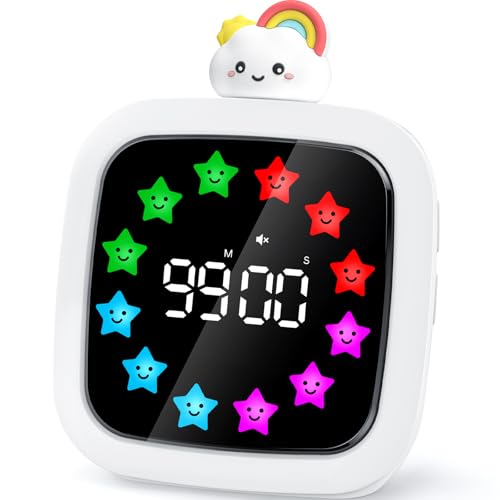
The Yunbaoit digital timer combines a countdown display with a rechargeable battery, enabling up to 25 hours of operation between charges. It features a pause function, allowing interruptions without resetting the timer, which can be useful for therapy or classroom transitions. Its rainbow styling and clear progress indicators help maintain attention and support time-based routines managed by caregivers or teachers. The device aims to balance visual clarity with flexible operation modes, making it a versatile option for varied settings.
Secura 60-Minute Visual Timer
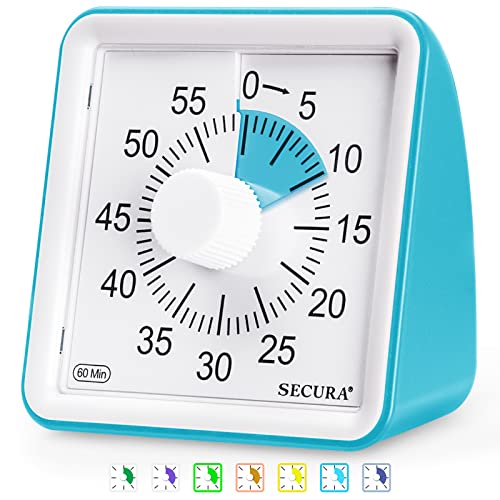
Secura’s 60-minute visual timer focuses on simplicity and reliability. It is easy to set by turning the dial clockwise and off by returning to zero. The blue disc design provides a straightforward visual cue for children who benefit from seeing the passage of time. Its clear audible cues can aid children with autism or ADHD in understanding transitions without relying solely on textual instructions. This timer is well-suited for classrooms, homes, and therapy environments where a predictable routine is prioritized.
Yunbaoit Visual Timer With Protective Case

This Yunbaoit timer features a rainbow disk display within a protective case, combining visual countdown with a durable shell. It offers three alert volume levels, including mute, which is helpful in quiet environments or for children who are sensitive to sound. The timer is designed for easy setup and robust use in classrooms or therapy spaces, where ongoing, calm time management is needed. The rainbow display provides a friendly and engaging cue for task timings and transitions.
Buying Guide: Key Purchase Considerations
When selecting a timer for autistic or neurodivergent children, consider how the device’s cues align with the child’s needs and the environment. Key factors include:
- Visual clarity: Choose timers with large, high-contrast displays or color-based progress (dots, rainbow disks) that are easy to read from a distance.
- Adjustable audio: Look for timers with optional sounds, adjustable volume, and a mute mode to accommodate sensory sensitivities.
- Durability and portability: In classrooms and therapy settings, a sturdy build and easy portability support versatile use across tasks and rooms.
- Power source: Rechargeable models reduce ongoing costs and logistics; battery-operated options may be simpler where charging is difficult.
- Ease of use: A simple dial or knob is ideal for quick adjustments, especially for younger children or caregivers who need to set timers quickly.
- Pause and resume: A pause feature helps during transitions or moments when a child needs a brief delay without resetting the timer.
- Customization options: Some timers offer brightness, volume, and display customization to accommodate individual preferences.
- Audible cues: Decide whether a timer’s alarm should be gentle, moderate, or absent, balancing effectiveness with sensory comfort.
- Contextual fit: Classroom timers may benefit from magnetic backs or wall mounting, while home setups might favor portable, flat designs for desks and shelves.
In summary, the best visual timer for an autistic child is the one that most naturally supports the child’s routine, reduces anxiety during transitions, and integrates smoothly into daily activities. Consider trying a timer with multiple features (visual cues, adjustable audio, and rechargeable power) to gauge what combination yields the most consistent engagement and independence.