Best Kids Calling Cards for Easy Play Dates and Keeping in Touch
Finding simple, age-appropriate ways for kids to share contact information or invite friends over can boost social skills and independence. This article highlights five kid-friendly calling or play-date card sets that help children stay connected with classmates and new friends. Each option offers a cute, easy-to-fill design and practical usability for parents, teachers, and caregivers. Below you’ll find concise overviews, key features, and a practical buying guide to compare styles, sizes, and durability.
| Product | Brand | Notes |
|---|---|---|
| Let’s Play Card Play date cards for kids | ORTCI | Cute, fill-in format for classmate contacts |
| Let’s play sometime soon Card for kids Play date invitation card | ITZAMNA | Easy shareability for play dates |
| 50 Play Date Cards for Kids | m&h invites | Bulk set for classroom or playground use |
| Hayes Deck of Calling Cards | Hayes | Plastic-coated, durable design |
| Hoyle 6-in-1 Kids Card Game Pack | Hoyle | Multiple games; versatile for kids |
Let’s Play Card Play Date Cards For Kids

The Let’s Play Card from ORTCI is designed to help kids stay in touch with classmates and friends. The card set is simple to use: parents or kids fill in essential contact details, then hand the cards to friends or keep a few in a bag for spontaneous meetups. Its compact size and friendly design make it suitable for holiday gatherings, summer camps, and after-school activities. The product emphasizes ease of distribution and a low-pressure way for children to exchange information without sharing overly personal data. It’s a practical starter option for newer friendships and casual playdates.
Key features highlighted by the maker include a straightforward fill-in format and portability. The cards are positioned as an efficient tool to reduce the risk of lost or mixed-up contact information during busy seasons. Parents may appreciate the low-maintenance approach to coordinating playdates, while kids benefit from a tangible, friendly way to extend invitations. The design prioritizes safety and simplicity, helping children learn basic networking skills in a kid-friendly manner.
ITZAMNA Let’s Play Sometime Soon Card For Kids

The ITZAMNA kit offers a similar concept to simple play-date invites, with an emphasis on kid-friendly wording and a ready-to-fill layout. These cards are designed to help children communicate plans with classmates or new playgroup members. The compact format makes them easy to store in backpacks or pockets, while the festive appearance supports a positive, social tone for invitations. This option is well-suited for families seeking a convenient, approachable way to coordinate informal get-togethers without digital reliance.
The product’s core benefit is straightforward information sharing—name, contact information, and a date or note can be added by hand. Parents may appreciate the predictability of the layout for kids who are just learning how to ask to play. The cards are advertised as ideal for holidays, school breaks, and community activities, aiming to reduce miscommunication and keep younger friendships active between events.
50 Play Date Cards For Kids

The m&h invites product provides a bulk option for families, classrooms, and community groups. The set includes 50 play-date planning cards and a convenient way to exchange parent contact information. This makes it particularly useful for neighborhoods, summer camps, or after-school programs where children meet many peers. The cards are described as an efficient method for coordinating future visits, ensuring that both children and parents have easy access to necessary details for planning.
Durability and usability are emphasized through durable card stock and clear, legible text. The design focuses on helping kids practice social planning, while parents can quickly verify that contact information is correct. The kit supports ongoing playdates beyond a single meeting, reinforcing social routines and friendships as kids move between activities.
Hayes Deck of Calling Cards

Hayes offers a deck-style calling card concept with a plastic-coated bingo-card-inspired format. Each playing card is sized around 3.75 by 2.5 inches, making them easy for kids to carry and share. The set uses a durable, wipe-clean surface, which is practical for classrooms, clubs, and family gatherings where frequent handling occurs. While not explicitly a play-date invitation tool, these calling cards provide a lighthearted, kid-friendly way to exchange contact details or to invite friends to future activities in a playful format.
Applications include classroom activities, family events, and casual gatherings. The sturdiness of the cards suits younger children who may be less careful with delicate paper items. This option balances novelty with practicality, offering a tangible method to extend social opportunities beyond digital channels while keeping information simple and accessible for kids.
Hoyle 6-in-1 Kids Card Game Pack
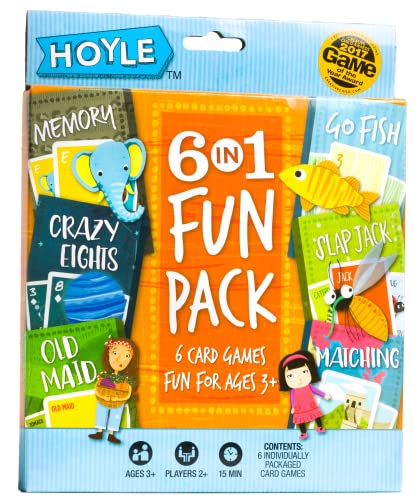
The Hoyle 6-in-1 set provides versatility beyond simple contact cards, combining games like Go Fish, Memory, Old Maid, Crazy Eights, Slap Jack, and Matching into a single boxed collection. While primarily marketed as a traditional card-game bundle, the title can serve as multiple avenues for social interaction among kids. It supports cognitive development, memory, and social play, which can complement the use of dedicated play-date cards by providing varied ways to engage peers during gatherings.
For families seeking a broader activity option, Hoyle’s pack offers a structured, shared play experience. It is suitable for children ages 3 and up, aligning with early learning goals while keeping playtime enjoyable. The kit’s accessibility and broad appeal make it a practical addition to a child’s growing toolkit for social engagement and collaborative play.
Buying Guide
- Age suitability: Look for cards sized for small hands and simple fill-in spaces. Young children benefit from large, bold text and clear prompts.
- Privacy considerations: Use cards that request only essential contact details and avoid sharing sensitive information. Consider parent-approved formats.
- Durability: For everyday use, choose card stock or plastic-coated options that resist spills and prints fading in lunchboxes or backpacks.
- Size and portability: Compact designs fit easily into wallets, backpacks, or pockets, encouraging spontaneous exchanges.
- Versatility: If you want more than invitations, consider sets that pair with games or classroom activities to maximize value.
- Durability vs. cost: Bulk sets offer savings and reusability for schools or groups, while single packs suit casual use at home or in after-school programs.
- Design and tone: Friendly, kid-centric graphics help children feel comfortable sharing information and inviting friends to play.
- Safety and supervision: Involve a caregiver in the first exchanges to reinforce safe information sharing and to supervise early social interactions.
- Accessibility: Some sets offer multi-language options or high-contrast designs to support varied learning needs.
- Compatibility with activities: If your child attends camps or classes, choose cards that align with those environments to streamline exchanges.
Overall, selecting the right kids’ calling or play-date cards depends on balance among ease of use, durability, and social development goals. Parents should consider how often their child will use the cards, the environments in which they will be exchanged, and the level of parental supervision that feels appropriate. While digital tools can support contact sharing, traditional cards remain a tangible, low-pressure option that reinforces polite invitations and face-to-face social skills.