Best Feeling Cards for Adults to Boost Emotional Awareness
Feeling cards can be practical tools for adults seeking to name, understand, and manage emotions more effectively. This guide highlights five thoughtfully designed card decks that support emotional intelligence, mindfulness, and coping skills. Each option offers unique benefits for personal growth, therapy-oriented practice, and everyday resilience. Explore these decks to find a reliable, accessible way to navigate feelings with clarity and confidence.
| Product | Brand | Key Benefit |
|---|---|---|
| Emotional Intelligence Card Deck – Master Your Emotions with 156 Emotion Cards and 37 Micro-Mindfulness Technique Cards to Enhance Resilience and Thrive | FeelWise | Comprehensive emotional understanding with structured techniques |
| 50 Emotions Flash Cards Volume 1 | CreateFun | Clear emotion recognition for therapy and learning |
| 50 Emotion Flashcards, Realistic Feeling Picture Cards | SpriteGru | Real-life photo visuals to reinforce emotional vocabulary |
| Coping Skills Cards for Anxiety & Stress Relief | Deyl cavier | Practical, multi-sensory coping strategies for stress |
| Additional context | N/A | Useful for diverse adult needs, including therapy, self-help, and education |
Emotional Intelligence Card Deck – FeelWise

The FeelWise Emotional Intelligence Card Deck is designed to help adults build self-awareness and resilience through structured emotional exploration. Featuring 156 emotion cards, the deck covers a broad spectrum of feelings, enabling users to recognize, name, and positively channel emotions. The addition of 37 micro-mindfulness technique cards provides actionable steps for processing emotions with clarity, promoting steady emotional regulation. This combination supports personal growth, relationship communication, and stress management. The deck’s user-friendly format makes it suitable for individual practice, coaching sessions, or group discussions.
What to expect: a comprehensive framework for emotional understanding, practical exercises for daily life, and a focus on resilient mindset-building. The micro-mindfulness cards offer concise, repeatable practices that can fit into short breaks or dedicated reflection time. The set is well-suited for adults seeking a practical, evidence-informed tool to enhance emotional intelligence and emotional wellbeing over time.
50 Emotions Flash Cards Volume 1

Created by CreateFun, this set is widely used by speech-language pathologists, occupational therapists, dementia caregivers, and educators. It features 10 core emotions—happy, sad, angry, scared, surprised, tired, stressed, love, excited, and disgust—organized to support emotional development and communication. The cards function well in therapy-oriented activities, classrooms, or homes, helping users recognize and articulate feelings. By aligning visual cues with concise emotional labels, the deck supports cognitive skills such as visual recall and problem-solving, making it a versatile addition to therapy and learning routines.
Target users include adults seeking structured emotion recognition practice, seniors in memory care, and students in therapeutic or educational settings. The deck’s compact design facilitates quick daily sessions, while its clear labeling helps establish a shared language for discussing emotions in various contexts.
50 Emotion Flashcards by SpriteGru
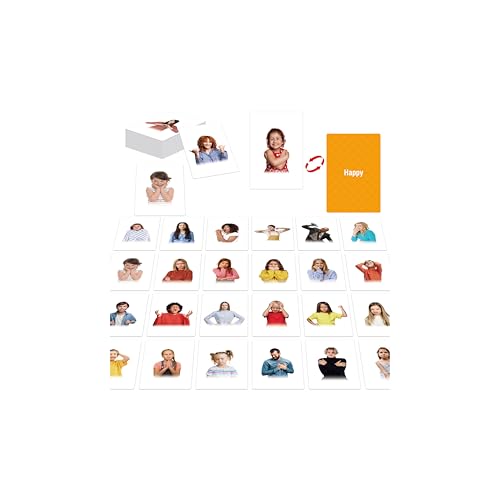
This bundle provides 50 realistic feeling photo cards designed to illustrate a wide range of emotions for kids and adults alike. The back of each card displays the corresponding emotion word, reinforcing vocabulary through visual and verbal cues. With large-sized cards (approximately 4” x 5.8”), the set is easy to handle and read from a distance, making it accessible for group activities, therapy sessions, or individual practice. The realistic imagery supports recognition of subtle emotional nuances, which is beneficial for adults refining their emotional literacy and social communication skills.
Use cases include therapy exercises, social skills training, and self-guided reflection. The double-sided design encourages discussion, journaling prompts, and scenario-based activities that explore how emotions influence behavior and decision-making in daily life.
Coping Skills Cards for Anxiety & Stress Relief

Designed to support adults and teens facing anxiety, stress, or trauma-related challenges, this set emphasizes practical coping skills. The 10 cards offer 20+ techniques across visual, tactile, taste, auditory, olfactory, and multi-sensory modalities. The compact and portable design makes it suitable for on-the-go use, during moments of high distress, or as part of a daily routine. The cards aim to restore emotional balance by providing quick-access strategies to reduce arousal, ground attention, and shift toward more adaptive responses.
Intended for a broad audience, including those with BPD, PTSD, DID, CPTSD, and other mental health considerations, the deck supports both crisis management and ongoing skill-building. While not a substitute for professional treatment, it serves as a practical adjunct to therapy, mindfulness practice, and self-care planning.
Buying Guide: Key Purchase Considerations
- Purpose and audience: Choose a deck aligned with your goals—self-guided growth, therapy support, or classroom training. Consider whether you need real-life photos, illustrated icons, or a balance of both.
- Card quantity and scope: Larger decks cover more emotions but may be heavier to manage. Determine whether you prefer a broad spectrum (e.g., 156 emotion cards) or a focused set (e.g., 50 core emotions).
- Design and accessibility: Realistic imagery can aid recognition for some users, while simple visuals may reduce cognitive load for others. Large card sizes improve readability for groups or seniors.
- Supplementary content: Micro-mindfulness or coping technique cards can extend usefulness beyond labeling emotions to practical application.
- Durability and portability: Consider card stock quality and whether the deck travels well for on-the-go use, therapy sessions, or classroom activities.
- Evidence and suitability: Some decks are designed for clinical use or education. Review any included instructions for therapeutic alignment and safety considerations.
- Pricing and value: Compare per-card cost, bundled extras, and potential long-term benefits across frequent users or multiple participants.
- Ethical and inclusive framing: Look for decks that present emotions in a non-stigmatizing, culturally sensitive way to support diverse users.
- Usage guidelines: Check whether the deck includes prompts, journaling ideas, or activities that facilitate structured discussion and reflection.
These considerations help ensure you select a feeling-card deck that fits personal preferences, therapy goals, and group dynamics, while supporting ongoing emotional learning and resilience.